adsense code

Friday, May 27, 2016

The Pen is Mightier Than the Keyboard

I have written several earlier posts on the value of teaching and learning cursive. A recent infographic provides a nice summary of the advantages of handwriting over the keyboard. Handwriting engages the brain more deeply in creative thinking.

Among its many advantages claimed in the infographic, handwriting:
  •  Provides children with a clearer understanding of how letters form words, sentences, and meanings.
  • Teaches reading skills
  • Improves memory retention
  • Promotes critical and creative thinking (note taking, mind maps, etc.)


And now there is a slick newway of teaching cursive, invented by Linda Shrewsbury. She analyzed all the alphabet letters to see if there were common pen strokes that were common to many letters. She found that handwriting all the letters could be mastered by learning just four simple pen strokes. So she wrote a book, Cursive Logic, that explains how to learn cursive by first learning these four basic strokes. Instead of spending hours, days, and weeks learning how to copy each letter in an attractive and readable way, you practice the four strokes (which can be mastered in less than an hour). Then with these mastered, you quickly learn how to apply the strokes appropriately to the letters in four short lessons.

Monday, May 23, 2016

A Potential New Area for PTSD Research

Post-traumatic stress disorder (PTSD) is a common form of fear memory, in which a pervasive emotional stress is created by remembering experiences that evoked fear. If our brains could forget the fear memory, PTSD would decay away. Why can't we forget fear memories? In part, it is because they keep getting rehearsed, and much of this rehearsal occurs during our dreams. One major normal function of sleep is to help the brain to strengthen memory of things, good and bad, that happened during wakefulness.

Recent animal research suggests how the brain accomplishes this memory strengthening (called consolidation). More importantly, consolidation is manipulable. The study began with the established understanding that memories are of two kinds: explicit (episodic) and implicit (procedural). Fear memories are episodic; that is, we remember the episodes in our life that were traumatic. Episodic memories are laid down by a structure in the brain known as the hippocampus, a part of the cerebral cortex that is folded underneath the main cortex and has different internal structure and connections with other parts of brain. Moreover, the hippocampal consolidation effect is exerted when it generates a voltage rhythm of roughly 6-10 waves per second that also contains nested higher frequencies (gamma) of about 30-90.

With this background of information, researchers at McGill University in Canada* decided to see how fear memory might be affected by disrupting hippocampal theta rhythm, which in sleep occurs during the REM (dream) stage of sleep. The study was conducted in mice, monitored during their sleep, soon after they were trained to remember certain objects and also after they had learned a conditioned fear memory. The object-learning task was to remember where a novel object had been placed (the hippocampus is also known to provide the brain with spatial location information). The other learning task, and the one relevant to PTSD, involved exposing awake mice to a sound warning followed by electrical shock to their feet. They manifested the associated fear learning by freezing all movement as soon as the sound cue was heard, before the foot-shock was actually delivered.

The key part of the experiment was the ability to shut down theta activity. Other workers had shown that neurons can be made hypersensitive to laser light by injecting their environment with a virus that is fused to a fluorescent protein. The location of neurons that drive theta rhythm is known, and so the researchers injected such a virus into that area and also implanted a fiber optic that could deliver laser light on those neurons. Neuronal activity in this area could be stopped whenever laser light activated the protein.

With both memories of object location and conditioned fear, testing for recall on the next day revealed that memory formation was prevented by blocking theta activity during the preceding REM sleep when the blocking occurred during a critical four-hour period immediately after initial learning. Similar activity disruption during the non-dream, non-theta, stage of sleeping did not prevent either form of memory.

Even if you could use this laser-light technique in humans (and theoretically you can), you might say this approach could not work because it is usually not practical to institute formal therapy within four hours after an initial emotionally traumatic experience. But, a common current PTSD therapy is based on the established phenomenon of re-consolidation of memory. Every time you recall a memory, it has to be re-stored, and thus it is susceptible to modification (by talk therapy, for example). The revised memory can replace the original fear memory. A therapist could have a patient recall the bad experience, go to sleep right away, and receive light blocking of theta to disrupt the re-storage of the bad memory. Perhaps a simpler approach would be to get good dream sleep soon after talk therapy, which might help cement the revised, less traumatic memory.

*It was at McGill, about a half-century ago, that the role of the hippocampus in memory formation was first discovered.


Source:

Boyce, Richard, et al. (2016) Causal evidence for the role of REM sleep theta rhythm in contextual memory consolidation. Science. 352, 812-815.


For more information about learning and memory, consult Memory Medic’s recent book, Memory Power 101.

Saturday, April 30, 2016

Why Isn't Common Core Working?

First, the facts: Common Core (CC) is not working, as measured by its own standards and metrics. After seven years of implementation in 40 states, Associated Press now summarizes the National Report Card that reveals that two-thirds of graduating seniors are not ready for college. Seventy-five percent failed the math test and sixty-three percent failed the reading test.

These dismal findings are no surprise, as we get similar reports every year during CC's reign. Everybody seems to have an explanation, which too often is an excuse—like we don't spend enough money on schools. That conclusion is easily refuted by extensive documentation, and I won't take the time to rehash that evidence here. But let's look at some possible explanations that are widely shared and perhaps real:

Teaching to the Test. The problem with CC is not so much with its standards but with the testing regimen that has been captured by two publishing houses. The federal government education bureaucrats ("educrats") have turned schools into test factories for CC-based testing. In other areas of politics, we would call that crony capitalism. The focus of teaching in many schools is to teach students to pass multiple-choice tests limited to specific standards in only two areas, math and English. In the old days, we practiced learning the multiplication tables; today, kids practice taking tests—again and again. If teaching to the test worked, maybe we could endorse the practice. But it clearly doesn't work. Why? This leads us to other explanations.

One Size Fits All. Federal educrats treat our hugely heterogeneous population as if it were homogeneous. If you live in the Southwest, you know that this part of the country is largely Mexicanized, with huge numbers of students who don't even speak English. The country as a whole is a mixture of suburbia and ghettos. The government promotes multi-culturalism, while at the same time demands that our schools produce a cookie-cutter product. We have Red and Blue states that seem to be moving further apart. We have growing disparities in personal wealth, aspirations, and family structure. It is a fool's errand to think that one size fits all is the remedy for education.

Political Correctness. CC is notorious for its PC curriculum, which contains significant elements of anti-Americanism and leftist doctrine that have little to do with education. Moreover, for many students, such PC is demotivating. Kids do have a capacity for spotting when they are being manipulated by adults. They do not like it, especially when it is imposed in school.

State-centric versus Student-Centric Education. Students live in a different mental world than adults. Our standards of learning are not inherently theirs. Whatever it is we say they must learn has to be put in a context that is meaningful to them. Math, for example, taught as an isolated subject, has little attraction for most students, especially when the only purpose is to pass a federally mandated exam. However, when taught as a necessary component of a shop class or classes in other subjects, math acquires a relevance that even students can value. Language arts, when studied as an end itself, is hardly as motivating as when students learn it to accomplish their own purposes, like perhaps debating with peers, writing persuasive blogs and social media posts, or school publications. I think that educrats have forgotten what it is like to be a youngster.

Trashing Memorization. CC was designed to abandon the old emphasis on memorization and focus on teaching thinking skills. This is most evident in math instruction. Learning to think is of course admirable, but why then do we not see improvement on the tests designed to measure thinking skills? Do educrats not know that you think with what you know, and what you know is what you have memorized?

I have professor colleagues who criticize me for trying to be a "Memory Medic" and help students learn how to memorize more effectively. Teachers seem reluctant to teach memory skills, or maybe they don't know what the skills are. Even if teachers can teach such skills, their principals and superintendents set the demands that are focused on teaching to the test. Teaching learning skills these days is an alien concept.

What schools need to focus on is helping students to develop expertise in something. That may be in band, art, vocational classes, farm projects, or any area where skills are valued. CC does none of that. The real world needs and rewards expertise. Of course, experts can think well in their field of expertise. And why is that? They know their subject.

When a student memorizes information, she not only acquires subject-matter mastery but the personal knowledge of success. Nothing is more motivating than success. A student owns the success. Nobody can take that away. Federal exams remind students of their ignorance. And we expect that to be motivating?

When I went to school decades ago, school was fun, because I was learning cool stuff and nobody was on my back all year long to make the teacher and school to look good with my test scores. Today, a lot of kids hate school. I would too.


"Memory Medic" has three recent books on memory:

1. "Memory Power 101" (Skyhorse) - for a general audience at http://www.skyhorsepublishing.com/book/?GCOI=60239100060310http://www.skyhorsepublishing.com/book/?GCOI=60239100060310

2. "Improve Your Memory for a Healthy Brain. Memory Is the Canary in Your Brain's Coal Mine"- an inexpensive e-book for boomers and seniors in all formats at Smashwords.com, https://www.smashwords.com/books/view/496252https://www.smashwords.com/books/view/496252


3. "Better Grades, Less Effort" - an inexpensive e-book for students at Smashwords.com, https://www.smashwords.com/books/view/24623https://www.smashwords.com/books/view/24623

Tuesday, April 26, 2016

The One Best Way to Remember Anything

As explained in my memory-improvement book, "Memory Power 101," the most powerful way to remember something is to construct a mental-image representation. All the memory books I have read make the same point. The professional memorizers, "memory athletes" who can memory the sequence of four shuffled decks of cards in five minutes, all use some form of mental imaging that converts each card into a mental-picture representation.

Now a recent experiment documents the power of mental images in a study involving seven experiments that compared memory accuracy with whether or not a drawing was made. College-student volunteers were asked to memorize a list of words, each of which was chosen to be easily drawn. Words were presented one at a time on a video monitor and students were randomly prompted to write the name of the object or make a drawing of it. Each word presentation was timed and a warning buzzer indicated it was time to stop and get ready for the next word display. At the end of the list, a two-minute filler task was presented wherein each student classified 60 sound tones, selected at random, in terms of whether the frequency was low, medium, or high. Then a surprise test was given wherein students were asked to verbally recall in one minute as many words as they could, in any order, whether written or drawn.

In the first two experiments students remembered about twice as many when a drawing representation had been made than when just the word had been written. Three other experiments demonstrated that drawing was more effective because the encoding was deeper. For example, one experiment was conducted like the first two, but included a third condition in which the subjects were to write a list of the physical characteristics of the word (for example, for apple, one might say red, round, tasty, chewy, etc.). This presumably provides a deeper level of encoding than just writing or
drawing the word. Results revealed that drawing was still more effective than either writing a list of attributes or writing the word.

Another highly important experiment was conducted that compared drawing and writing with just making a mental image without drawing it. Again, drawing produced the best results, although more words were remembered when mentally imaged than when written.

A follow-on experiment substituted an actual picture of the word instead of requiring the student to actively imagine an image. Here again, best results occurred with drawing, with seeing pictures being more effective than writing the word.

In a sixth experiment, drawing was still superior to writing even if the list of words was made longer or if the encoding time was reduced. In the last experiment, drawing was still beneficial in a way that could not be explained solely by the fact that drawings are more distinctive than writing a word.
The benefits of drawing were seen within and across individuals and across different conditions. The researchers concluded that drawing improves memory by encouraging a seamless integration of semantic, visual, and motor aspects of a memory trace. That makes sense to me.

The processes involved here that account for better memory are 1) elaborating the item to be remembered, 2) making a mental image of it or an alias for it, 3) the motor act of drawing the image, and 4) the reinforcing feedback of thinking about the drawing.

The implications of studies like this have enormous practical application for everyday needs to remember. The principle is that whenever you have something you need to remember, make a mental-image representation of it and then draw it. For example, if you have to remember somebody named "Mike" make a mental image of the person speaking into a microphone (mike). Then roughly draw Mike's main facial features alongside a microphone. There are all sorts of formal schemes for making mental images, even for numbers, as explained in my book. This present study indicates that the making of a mental image is powerfully reinforced when you try to draw it.

To some extent, this memory principle is used in elementary school, where drawing is a huge part of the curriculum. As students get older, teachers abandon drawing and usually so do the students. Perhaps educators need to revisit the idea that drawing has educational value at all grade levels.

Source:

Kluger, Jeffrey, (2016) Here's the memory trick that science says works. Time, April 22. http://time.com/4304589/memory-picture-draw/


Wammes, Jeffrey D. et al. (2016. The drawing effect: Evidence for reliable and robust memory benefits in free recall. The Quarterly Journal of Experimental Psychology. 69 (9), 1752-1776. DOI:10.1080/17470218.2015.1094494

Saturday, April 16, 2016

Confused? Organize Your Information

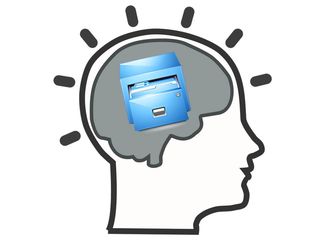
We all think with ideas and information that we hold in working memory. Working memory is like a scratch pad with a succession of content on the pad that is streamed into the brain's thinking apparatus. What is held on the working memory scratch pad is either retrieved from memory or inserted from real-time experience (like what you are reading or hearing).

W. R. Klemm
Source: W. R. Klemm
So, how does organization apply? As the brain seeks information to put on the scratch pad, it has to know where it is. Thinking is slow at best and possibly incoherent if ideas and information are located in disorganized repositories (such as sticky notes, memos, documents located randomly in different places. How can anyone keep a stream of coherent thought going if there is constant interruption trying to find the note or document one needs at each stage of thinking?
The other thing is that working memory has very limited capacity. Thus, when accessing notes and documents to use in thinking, the content needs to be easily extractable in small chunks. Here is an example that we can all relate to. Congress seems wedded to producing omnibus bills of some 2,000 or more pages. Even if legislators read the entire bills, they couldn't digest the content in any coherent way because the bills are not designed for thinking. No surprise then that we end up with incoherent, ineffective, and even destructive legislation.
Common Sense Methods for Organizing. The underlying principle should be to have a place for everything and put everything in its place. Examples:
  • Put important items (bills, car keys, purse, etc.) in their own same place.
  • Put sticky note reminders in key places.
  • Keep a calendar (but remember to check it each day).
  • Get a file cabinet and label the files in the most meaningful ways.
  • Have a tote bag or briefcase that always has in it what you need for the day.
Be proactive. If information of a given type accumulates over time, don't wait until the end to organize it. Organize as it goes along. For example, my federal tax information accumulates throughout the year. I don't wait until tax time to organize it. As bills, receipts, and the like come in during the year, I file them in file cabinet folders I have already set up for income tax return preparation. Come April, I can put all the information the tax accountant needs in a matter of a few minutes. And it reduces his time, which lowers my tax preparation bill.
Computer Methods. Computers give us access to enormous amounts of information. But the bad news is that the more information, the greater the need for good organization.
In the case of web-site addresses, most browsers have good systems for bookmarks, but after a couple years of saving bookmarks I find that I have not been sufficiently thoughtful as to how I set up folders and sub-folders.
For other kinds of information, the demand for organizational sophistication varies with the home and workplace workload. Here are a few, free, computer tools:

Tools that Synchronize Across Devices

  • One-Note On-line is included in Microsoft Windows. It allows creation of separate notebooks, and labeled "pages" within each notebook that accept separately pasted items that can be dragged about the page.
  • Evernote helps you keep all sorts of notes in topic-specific notebooks.
  • Google Docs is like Evernote, but is document focused.
  • Google Calendar helps you track events, set reminders, import appointments straight from Gmail, and is shareable.
  • Remember the Milk is a "to-do" reminder. It has specific apps for the web and multiple portable devices and you can connect it to multiple devices. It syncs with Outlook or Google mail.

Other Tools

  • TelePixie sends wake-up calls, reminders, and alerts to your mobile phone.
  • Sticky Notes comes with Microsoft Windows and is a computer version of the paper sticky notes you put on the refrigerator, walls, and elsewhere. You can keep the notes open all the time on the computer desktop or temporarily closed.
  • Stickies is a much more sophisticated system that runs on Windows. Unlike Sticky Notes which appear all at once on the desktop, Stickies notes are separately attached only to whatever document you are working on.
  • Flashcards provides a simple way to create flashcards with the information you are trying to learn and drill yourself to help make it stick in your mind.
  • WiseMapping is a mind mapping tool that provides you with an awesome way to keep notes in an organized fashion. Items in the map can have attached text commentary. Maps can be shared and exported in multiple formats.
Readers wanting to know more about how the brain works may be interested in Dr. Bill's recent book, Mental Biology (Prometheus).

Saturday, March 12, 2016

Could Your Brain Store All the Information on the Web?

The title sounds outrageous. But supporting data comes from research at the most prestigious Salk Institute. Other researchers had made enormous storage capacity estimates for brains, but this new estimate is 10 times greater. The estimate is on the order of petabytes, as much as the entire World Wide Web.

How does anybody come up with such estimates? What is the basic premise? First, memory is quantified in terms of number of bits of information that can be stored and recovered. In the case of brain, the question is how much information can be stored in a synapse, the communicating junction between neurons. Size and operational strength of a synapse are the key variables: strength can be measured in bits and strengths correlate with umber and size synaptic size. Under high magnification, synapses look like a bunch of beads on a string. The newborn brain, there are relatively few “beads,” but these increase in number and size as the baby grows and learns things. Sadly, in old age, many of these beads disappear unless the brain is kept very active.

In the Salk study of rat brains, electron micrographs of the memory-forming structure, the hippocampus, allowed 3-D reconstruction and detection of the diameters of synapses, which are the target synaptic structures in neurons. Synaptic strength correlates with storage capacity, and the strength is measured by the size of synapses, which appear as a round bead attached to  a stalk or neck to the supporting neuronal membrane. The size of the bead varies with synaptic strength because synaptic strength is created by more molecular machinery for mediating synaptic communication. Thus, spine bead size is a proxy for synaptic strength and storage capacity.

The investigators found that a small cube of brain tissue contained 26 different bead sizes, each associated with a distinct synaptic strength. The authors state that this equates to an approximate 4.7 bits of information at each synapse. Multiply 4.7 times the trillions of synapses and neurons in the brain and you get phenomenal storage capacity.

While I marvel at the elegant complexity of these research methods, I think the interpretations are a bit simplistic. There are some caveats that the authors overlooked. For one, an assumption is made that that the number of storage bits equals the logarithm of the number of bead sizes. The “bit” is a unit of information in digital communications. Information theory holds that one bit is the probability of a binary random variable that is 0 or 1, or more loosely defined as present or absent. One has to take some liberties to apply this concept to memory storage in brain, because the brain is not a digital computer. It is an analog biological computer.

Then there is the problem that the hippocampus deals only with forming declarative and episodic memories, not procedural memories like touch typing or playing the piano. Thus, the storage capacity, whatever it is, is not estimated for procedural memories. Secondly, declarative and episodic memories are not stored in the hippocampus, but rather stored in a distributed fashion throughout the brain. Since synaptic measures were made only on hippocampal tissue, there are no data for the rest of the brain.

But there is a larger issue. How does one know how many bits it takes to represent different memories? Not all memories are the same and surely they don't all require the same number of storage bits.

Actually, the exact number of bits of information that brains can store is rather irrelevant. By any measure, common experience teaches that nobody utilizes all their memory capacity. Moreover, the amount of information a given person stores varies profoundly depending on such variables as motivation to remember things, use of mnemonics, and level of education. The question that needs answering, given that we have vast amounts of unused storage capacity, is "Why don't we remember more than we do?"  Books like my Memory Power 101 provide some practical answers.

Source:


Bartol, Thomas M. et al. (2015).  Neuroconnectomic upper bound on the variability of synaptic plasticity.  eLIfe. Nov. 30. http://dx.doi.org/10.7554/eLife.10778

Wednesday, February 03, 2016

Training the Brain to Control Negative Emotions

The human brain contains a distinct network that serves as its executive agent. This network is primarily based in the dorsolateral prefrontal, parietal, and cingulate cortices. It regulates the many “top down” neurobehavioral functions that are so characteristic of human brain. Deficiencies in the function of this network underlie numerous neuropsychiatric conditions, but even underlie much of the failings of us all. The ability to regulate emotions and direct rational actions is typically associated with success in life, and inability to do so often leads to dire consequences.
This network can be trained to develop more robust capacity for executive control. This, as we all experience, is what parenting and schooling are about. Such training is especially crucial in early childhood when the challenges of school are first encountered. Even so, such training takes many years and for most of us may never be completed.
The question arises: can such executive control training be expedited? One possibility has recently arisen from several studies showing that working memory capacity can be expanded by a relatively short training time, and in the process general intelligence may be improved. Since the same system that determines intelligence is also operative in executive control, it seems reasonable that working memory training might also enhance executive control. To pursue this possibility in a specific context, researchers have hypothesized that inappropriate or maladaptive behaviors might be reduced by effective working memory training based on emotion-laded stimuli.
In a study by Suaznne Schweizer and colleagues in England, subjects in their early 20s were assessed for emotional control before and after 20 training days of 20-30 minute sessions. The experimental groups received dual n-back training with a simultaneously presented face and a word that was either emotionally negative or neutral. After each picture-word pair, subjects were to press a button to indicate if either or both members of the pair matched the stimulus presented n-positions back. Tests began with n = 1 and increased as subjects gain proficiency.
Not surprisingly, errors in both trained and untrained subjects increased at levels beyond n = 1, and the error rate was comparable for both groups. Results also indicated that subjects reported less distress when they consciously willed to suppress the distress compared with the null state of just attending to negative stimuli. But this distress reduction occurred only in the emotional working memory training group.
No change in neural activity levels was indicated in brain scans as a result of placebo training, but significant increases occurred in the executive control regions of interest as a result of emotional working memory training, irrespective of the level of n-back achievement.
The study also compared emotional responsivity before and after training. Subjects were asked to just pay attention or to pay attention and cognitively suppress their emotional reaction. Subjects rated their emotions on a numerical scale from negative to positive while viewing films that were emotionally neutral (such as weather forecasts) or that were emotionally disturbing (such as war scenes, accidents, etc.). Training caused no change in the group that viewed only neutral images, but in the groups viewing disturbing scenes, training decreased the perceived distress in a group told just to attend the scenes and was even more effective in the group told to suppress emotional reaction.
The emotional working memory training produced benefits that transferred to the emotional response task. Trained subjects not only regulated their emotions better but also developed greater brain-scan activity during the emotional task in the predicted brain regions of interest, the executive control loci. In other words, the training actually changed brain function on a lasting basis. Traditionally, we have always thought that the sole benefit of n-back memory training is to expand the amount of information that can be held in working memory. But now we see that such training can improve our ability to control emotions. Emotional working memory training improves the ability to suppress disturbing emotional responses and does so presumably because the executive control network is more activated. Thus, such training might also enhance many executive control functions, particularly responses to emotionally disturbing circumstances. A new tool for self-control may have been discovered.

Sources:

Banich, M. T., Mackiewicz, K. L., Depue, B. E., Whitmer, A. J., Miller, G. A. , Heller, W. (2009) Cognitive control mechanisms, emotions and memory: a neural perspective with implications for psychopathology. Neurosci. Biobehav. Rev. 33, 613-630.

Beck, A. T. (2008) The evolution of the cognitive model of depression and its neurobiological correlates. Am. J. Psychiatry. 165, 969-977.

Schweizer, S., Grahn, J., Hampshire, A., Mobbs, D., and Dalgleish, T. (2013).  Training the emotional brain: improving affective control through emotional working memory training. J. Neurosci. 33(12), 5301-5311.

Readers of this column can learn more about n-back training and numerous other ways to improve brain function in "Memory Medic's" e-book, Improve Your Memory for a Healthy Brain. For a limited time only, this book is priced at 99 cents, available in all formats from Smashwords.com.


Monday, January 11, 2016

Fables and Facts in Educational Neuroscience

In recent years, the growing public concern over deficiencies of schools has led a growing number of educations to embrace neuroscience. Neuroscience is a discipline that integrates anatomy, physiology, psychology, psychiatry, pathology as they relate to function of the nervous system, particularly the brain. In 1969, I was one of 500 charter members of the society that formalized the discipline, the Society for Neuroscience. But only in the last decade has there been much interest in the potential for neuroscience to influence educational policy and practice.
In educational circles, this interest has been expressed with such terms as "brain-based learning," "educational neuroscience," and "neuro-education." The latter term is used for my Linked-in group. Whatever it ends up being called, a new discipline is growing. So far, both good and bad effects are manifest.
Numerous critics have pointed out that neuroscience has not had much impact on education, and worse yet has spawned a series of harmful myths. The myths arise frequently from well-meaning people who have misunderstood and misapplied the findings of neuroscience. Sometimes, the myths come from zealous neuroscientists who make false claims and promises. More often, the myths come from educators who lack scientific training.
A recent review has identified some of the more flagrant myths. Some beliefs are downright foolish and have no research-based evidence. For example, there is the false (and untestable) claim that we only use 10% of our brain. I have no idea where this absurdity arose, but surely it was not from a professional neuroscientist. But one very prominent scientist, whom I do not wish to embarrass, made an outrageous claim that 95% of everything humans do is programmed and that basically we have no free will to improve ourselves or do anything else. I challenge this idea that free will is an illusion in my new book, now in the page-proof stage. The existence of free will is essential for an ability to take personal responsibility and be held accountable for one's beliefs, thoughts, and actions. Belief that free will is an illusion is demotivating, leading children to think they are irredeemable victims of their biology and environment. Neuroscience research clearly establishes that the brain is readily changed by one's choices of experience, thought, and behavior. Freedom to make beneficial choices is empowering.
Another myth, not likely attributable to a scientist, is the claim that the brain shrinks if a child drinks less than six glasses of water each day and that this will cause children to underperform in school.
Such myths have led some critics to charge that neuroscience hype is destructive of sound educational practice. In some cases, that charge is justified. For example, some neuroscientists and educators have believed that children have differing learning styles and that teachers need to adjust teaching to accommodate visual, auditory, and kinesthetic learners. But controlled laboratory studies fail to confirm such biological differences among children. Yet belief in individualized learning styles is still believed by over 93-97% of teachers in five surveyed countries (U.K., China, Netherlands, Turkey, Greece). In those same countries, 71-91% of teachers believe, without evidence, that individual differences among learners are explained by differences in right-brain/left-brain dominance.
Many educators oppose IQ tests, presumably because the score differentials  discriminatively label capability. This has given rise to the notion of "multiple intelligences," which is an untestable hypothesis because of the uncontrolled variables involved in defining the types and number of intelligences. There is also a common belief that IQ is fixed and unchangeable, yet evidence to the contrary is abundant.
Another mistaken belief is that the early ages of 0-3 years old are a critical period wherein most brain development occurs. There is no supporting evidence, and a vast amount of evidence shows that the brain is in continual development throughout life, even possible in old age. Brain development and learning capabilities develop at different rates and times in different people.
Nonetheless, a belief in the special importance of pre-K seems to be growing, even though there are indications that some kinds of instruction, such as reading, achieve better success when they are delayed. In Finland, noted for its excellence in education, teaching policy aims at delaying didactic education; "pre-school" education begins at age 6. Their kindergarten day lasts only four hours and is filled mostly with play time and social activities. Teaching of reading may not begin until age 7. Yet, in the U.S., Common Core standards require rigorous language training in kindergarten. There is no evidence that children who are taught to read in kindergarten have any long-term benefit from the early exposure. Likewise, the latest evidence shows that "Head-start" programs have no lasting impact, yet there is great public support for creating pre-Head Start programs.
 Two common learning disabilities, ADHD and dyslexia, have been widely studied, both by educators and neuroscientists. Unfortunately, confusion abounds. In the case of ADHD, there is belief that it has to be treated with drugs and that it cannot be reduced by teaching or behavioral therapy. Myths have surrounded dyslexia, ranging from ideas that it does not exist to treatments based on the false notion that it was caused by a visual perception deficit. The real cause seems to be a problem with phonological coding.
As with any new scholarly discipline, a degree of misunderstanding and hype should be expected with educational neuroscience. The proper perspective is to be wary of false prophets and snake oil, but open to the possibility that new knowledge in neuroscience has genuine potential for enriching education practice and outcomes. Research on the biology of memory, reviewed in one of my books, has clear beneficial potential for education that has not been exploited. Better and more informed interdisciplinary collaboration is needed if we wish neuroscience to enrich rather than mislead education.  

Sources:

1. Howard-Jones, Paul. A. (2014). Neuroscience and education: myths and messages. Nature Reviews. Neuroscience. 15, 817-824.

2. History of SFN, 1969-1995. https://www.sfn.org/about/history-of-sfn/the-creation-of-neuroscience/establishing-the-society-for-neuroscience

3. Neuro-education: promoting cognitive development. https://www.linkedin.com/groups/4883556

4. Walker, Tim. (2015). The joyful, illiterate kindergartners of Finland. http://www.theatlantic.com/education/archive/2015/10/the-joyful-illiterate-kindergartners-of-finland/408325/

5. Klemm, W. R. (2016). Making a Scientific Case for Free Will. New York: Elsevier. In press.

6. Klemm, W. R. (2012). Memory Power 101. New York: Skyhorse.